
Itemise mixed tasks clearly
Split out labour, materials, call-out, and extras so the customer can see what they are agreeing to.
Handyman quoting software for UK sole traders and small teams
Handyman work rarely arrives as one neat task. A customer wants a leaking tap sorted, two shelves fitted, a loose gate adjusted, and a couple of "while you're here" extras added before you leave.
Soleify helps you turn that kind of mixed work into a clear quote quickly, keep open quotes visible, follow up before the customer disappears, and turn accepted work into an invoice without rewriting the whole job later.
It is a good fit for handymen who quote regularly and want less evening admin, not a full maintenance-management system.
The jobs are small, but the quoting admin is often not.
That usually leads to late quoting, inconsistent pricing, and open quotes sitting in WhatsApp, notes, or your head with no clear next step.
For most handymen, the answer is not more office software. It is a simpler quote-follow-up workflow that keeps the small jobs moving.
Soleify is built for the stage between the visit and the paid invoice: the quote, the follow-up, and the accepted work that needs turning into paperwork.
Split out labour, materials, call-out, and extras so the customer can see what they are agreeing to.
Useful when repeat customers come back with another small repair a few weeks later.
See which handyman jobs are still undecided instead of guessing what needs chasing.
Quote the main job cleanly while still showing add-ons the customer can approve separately.
Give each quote a clearer next step instead of letting the work disappear behind the next site visit.
Use the accepted quote as the starting point instead of typing the same mixed job twice.
Product proof
See how Soleify keeps mixed handyman quotes clear, keeps open work visible, and gives you a cleaner handover once the customer is ready to reply.
Screenshots show real parts of Soleify. Example names and job details are illustrative only.
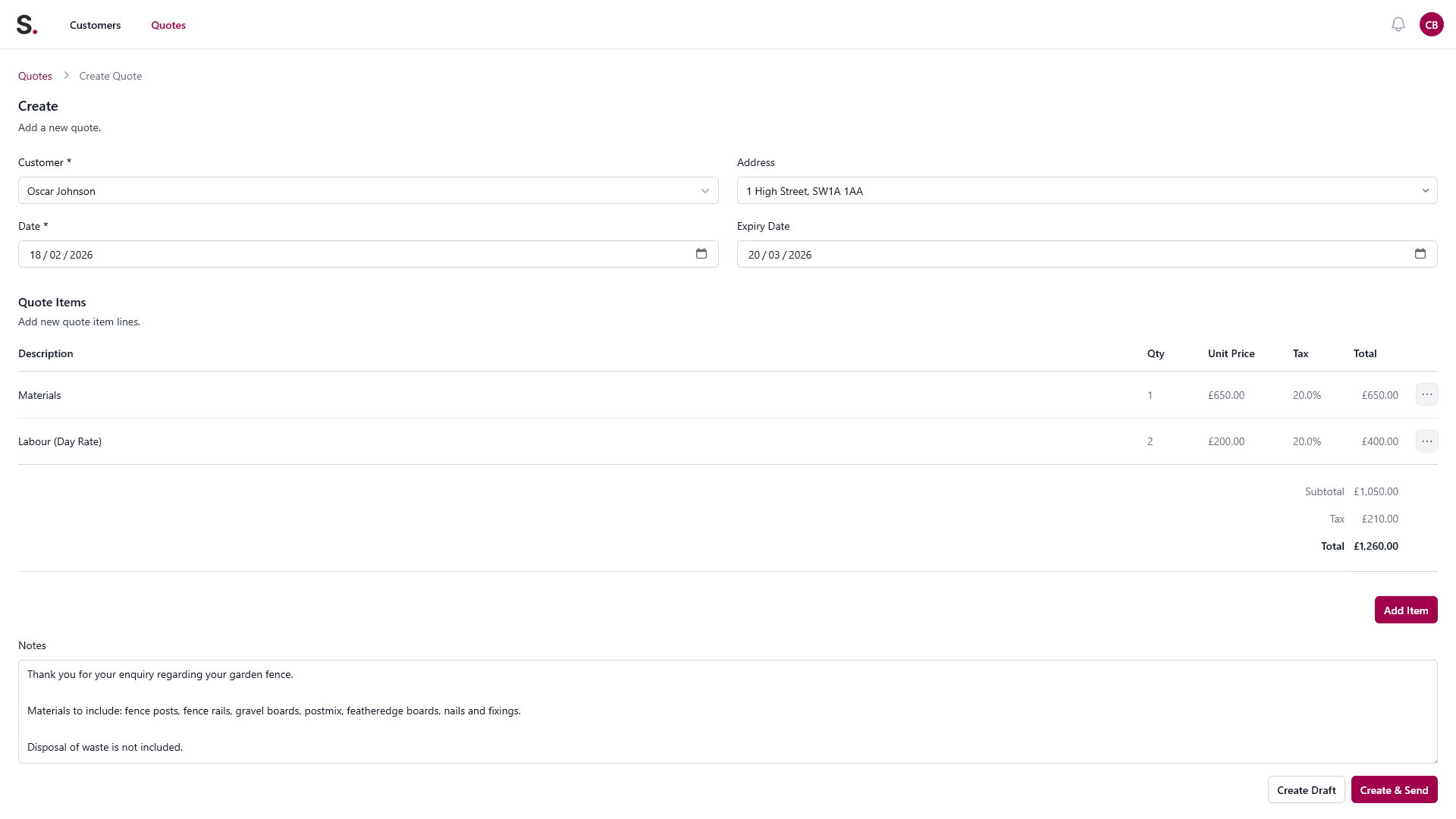
Quote builder view
Add the customer, itemise the work, and keep the measurements, materials, and job details together instead of rebuilding them from texts later.
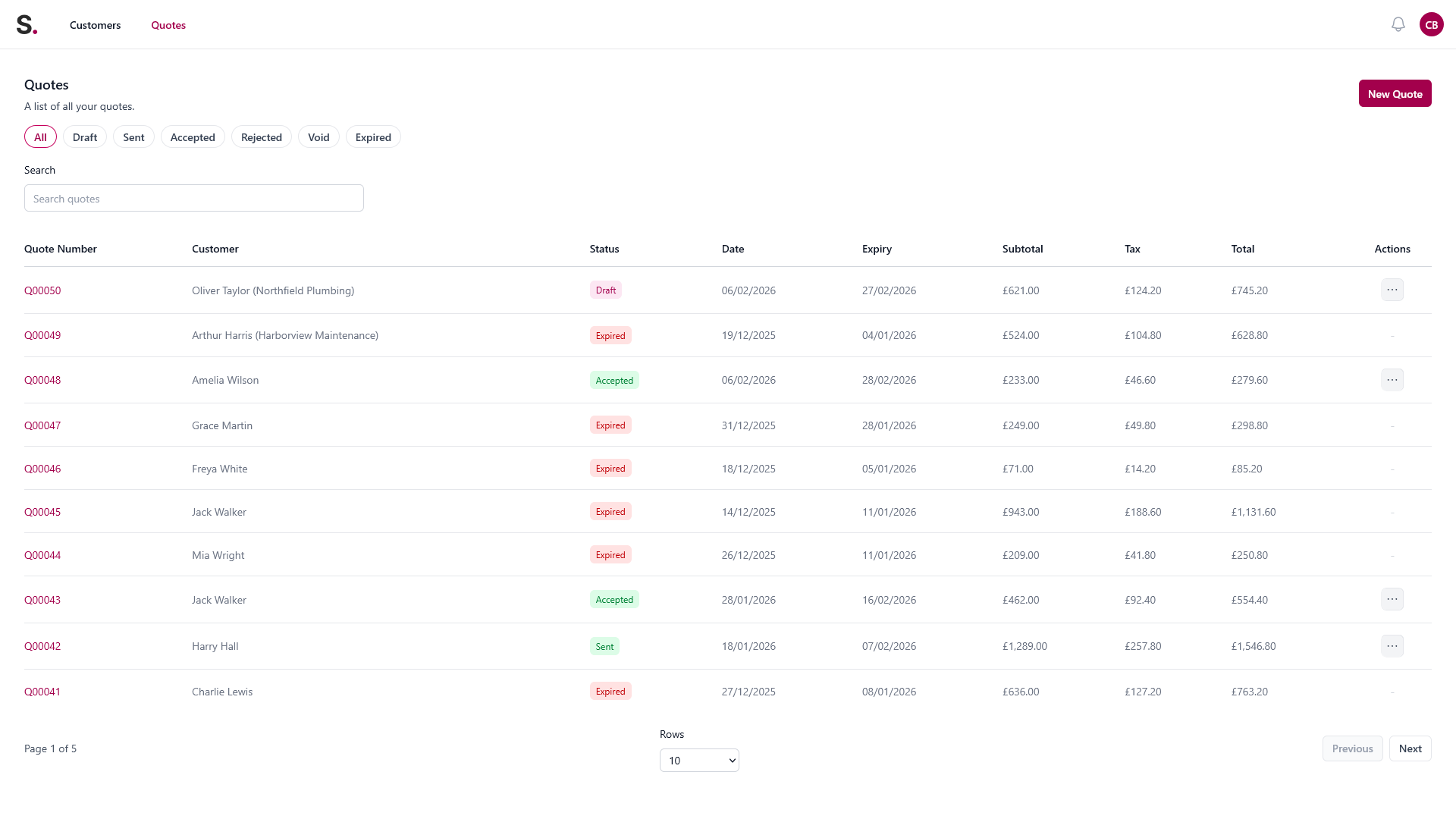
Open quote tracking
See quote status in one place so follow-ups do not depend on memory, scraps of paper, or scrolling back through WhatsApp.
A landlord asks you to reseal a bath, rehang a cupboard door, replace two fence boards, and price a possible extra shelf installation while you are there.
Add the customer once and note each task while the visit is still fresh.
Break out call-out, labour, materials, and the optional shelf work instead of sending one vague total.
If the landlord needs to check with a tenant or approve the extra work, the quote still stays visible for follow-up.
Once the approved scope is confirmed, use that accepted quote as the basis for invoicing.
Illustrative only. The aim is to make the job easy to understand before the customer replies.
Yes. That is often the clearest way to show what the customer is paying for on mixed repair work.
They are easier to manage when they are visible in the quote instead of rolled into one rough total.
No. It is aimed at sole traders and small trade businesses that mainly need quoting, open quote tracking, follow-up, and invoicing.
Yes. Keeping the customer and previous quote details together makes repeat work easier to price properly.
Keep mixed tasks, extras, open quotes, and invoicing in one simpler workflow.